


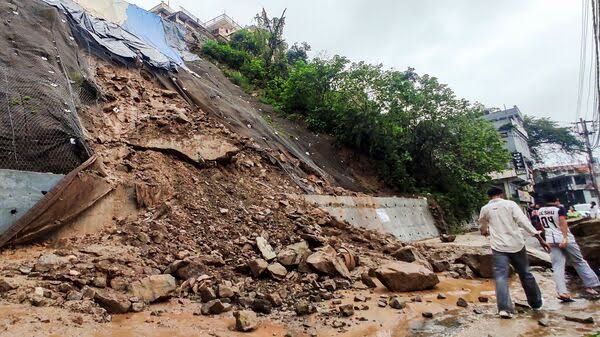
DARFUR, SUDAN — A desperate search for survivors is underway in Sudan’s Darfur region, where a massive landslide is feared to have killed up to 1,000 people. The tragedy, which occurred on Sunday in the remote village of Tarsin, has wiped out the entire community and underscored the immense suffering civilians face in a country ravaged by a brutal civil war.
The landslide was triggered by days of relentless heavy rainfall in the Jebel Marra mountain range, located on the border of Central and South Darfur states. The Sudan Liberation Movement/Army (SLM/A), an armed group that controls the area, stated that the entire village was “leveled to the ground.” According to the group, only one person is known to have survived the disaster.
The death toll, while difficult to confirm due to the remoteness of the site and the ongoing conflict, is estimated by the SLM/A to be over 1,000. This makes it one of the deadliest natural disasters in Sudan’s recent history. The U.N.’s humanitarian coordinator for Sudan, Luca Renda, offered his “heartfelt condolences” and stated that the UN and its partners are mobilizing to provide support to the affected population.
The disaster has intensified an already dire humanitarian crisis in Sudan. The area where the landslide occurred has become a refuge for families fleeing violence in the besieged city of El Fasher and other parts of Darfur. The ongoing war between the Sudanese Armed Forces (SAF) and the paramilitary Rapid Support Forces (RSF) has made it extremely challenging for international aid organizations to access the region.
The U.N. and its humanitarian partners are coordinating a response, but the difficulty of reaching the affected area is a significant obstacle. ReliefWeb, a leading humanitarian news service, stated that the area is largely inaccessible to humanitarian organizations due to ongoing conflict and restrictions.
The landslide is a tragic reminder that civilians in Sudan are at the mercy of both man-made conflicts and natural calamities. The urgent need for a ceasefire and unhindered humanitarian access has become more critical than ever, as millions remain displaced and exposed to disease, famine, and now, the devastating effects of the rainy season.
